

How we organized a hackathon in 35 days

How we organized a hackathon in 35 days
Why hold a hackathon
When we decided to organize an AI agents hackathon, we were not thinking about branding exercises or recruiting pipelines. We had a simpler, more genuine motivation: we wanted to bring together the people in Chile who are actually building with AI agents—not just talking about them—and give them a reason to push their ideas further in a single, intense weekend.
The AI agent ecosystem in Latin America is still young. There are plenty of conferences and meetups where people discuss what agents could do, but far fewer spaces where builders sit down, write code, and ship something real. We wanted to create that space.
We also believed that a hackathon would surface the kind of raw, creative applications of AI agents that you do not see in polished product launches. When talented people have 48 hours and no constraints other than "build something with AI agents," the results are often surprising—and sometimes genuinely useful.
There was one catch: we gave ourselves just 35 days to pull it off.
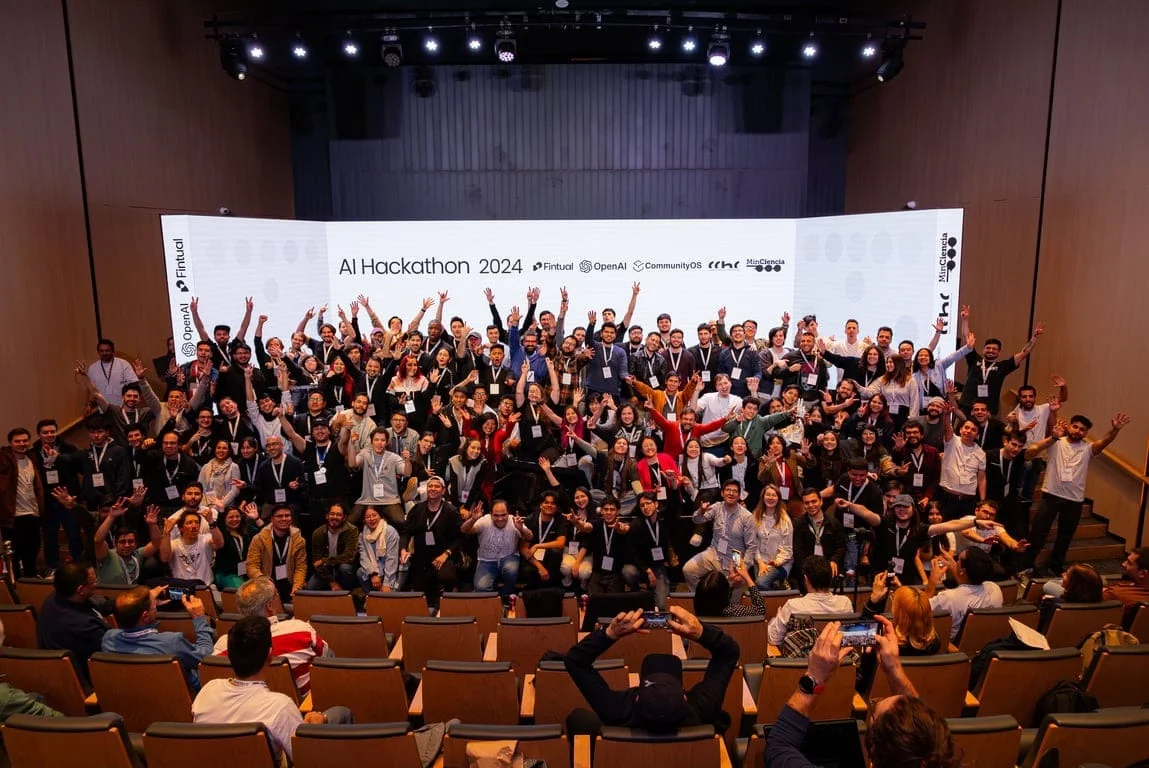
Meeting basic standards
Organizing a hackathon is ultimately an exercise in logistics and trust. Participants invest a weekend of their time—often taking days off work or sacrificing family time. The least you can do is make sure the basics are covered:
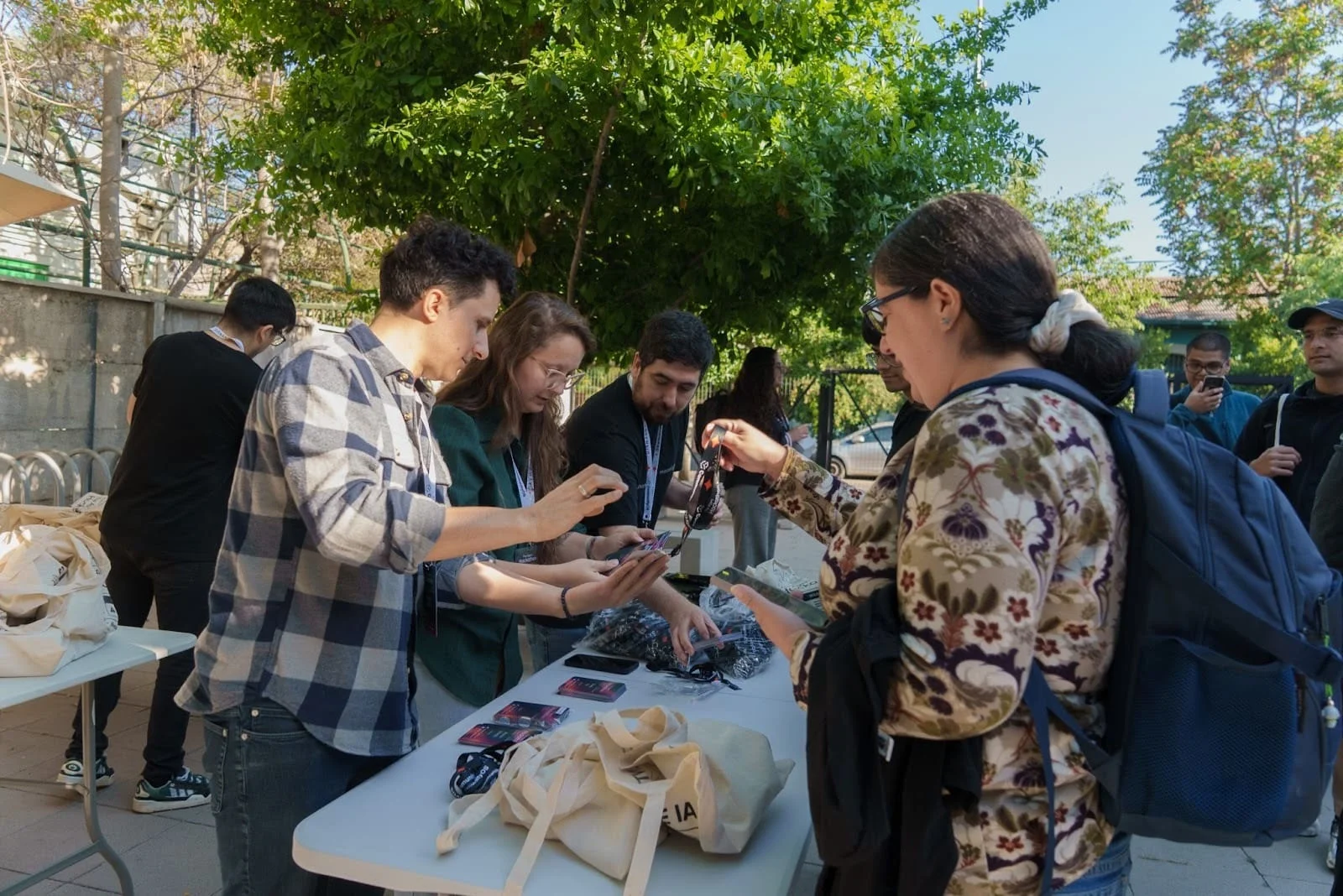
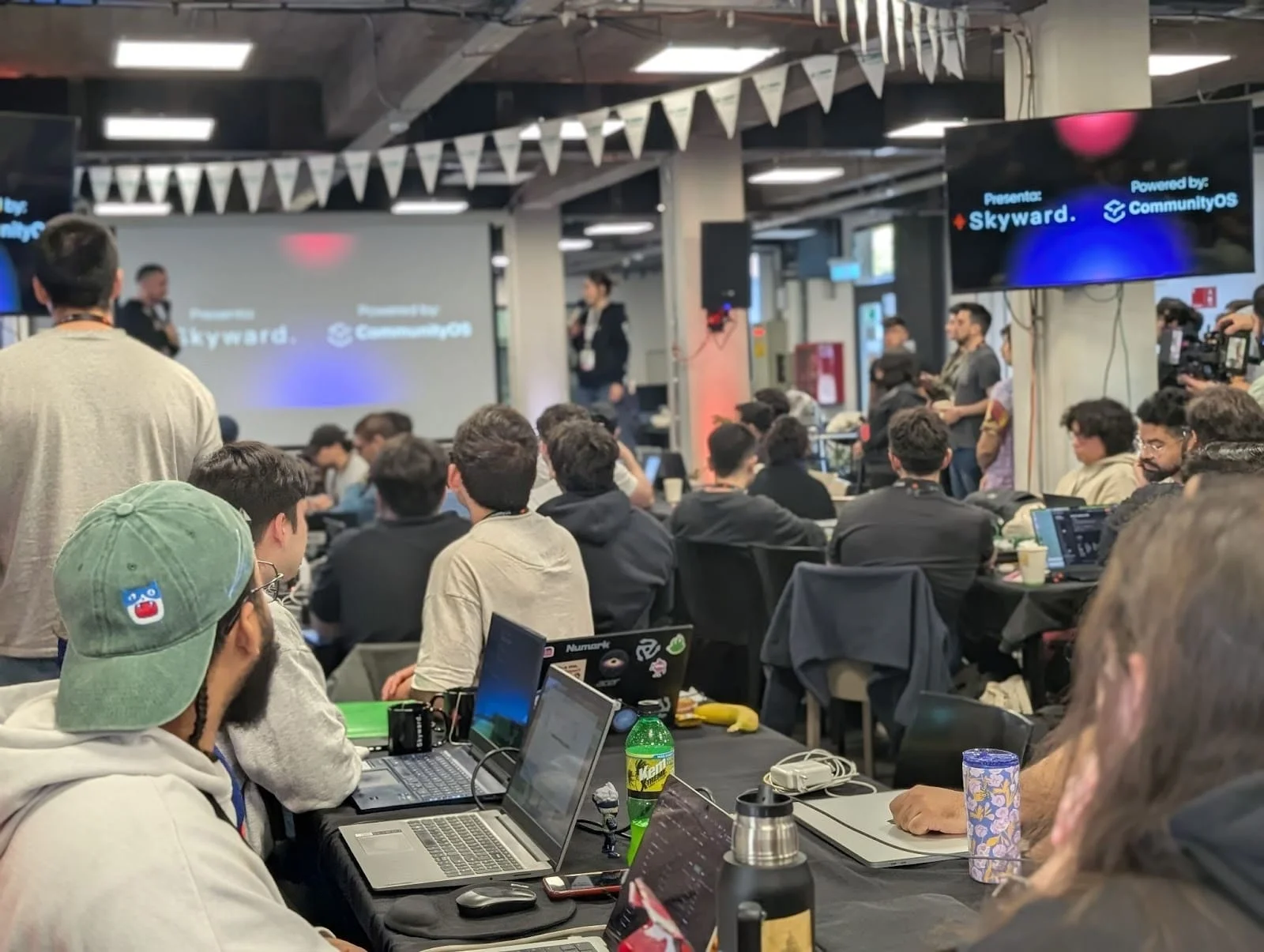
- Venue. A space large enough to accommodate all teams comfortably, with reliable Wi-Fi, power outlets at every table, and a layout that encourages both focused work and casual interaction.
- Food and drinks. People cannot build well on empty stomachs. We ensured there was good food throughout the event—not just pizza and energy drinks, but real meals and healthy options.
- Clear schedule. Participants need to know exactly when things start, when they end, when judging happens, and what the submission requirements are. Ambiguity breeds frustration.
- Technical support. Having mentors and technical staff available throughout the event to help teams debug issues, clarify rules, or provide guidance on APIs and tools.
- Fair judging. Transparent criteria, qualified judges, and a process that participants trust. Nothing kills a hackathon faster than the perception that judging was arbitrary or biased.
We treated these as non-negotiable. Every decision in our 35-day planning sprint was filtered through a simple question: does this make the experience better for the participants?
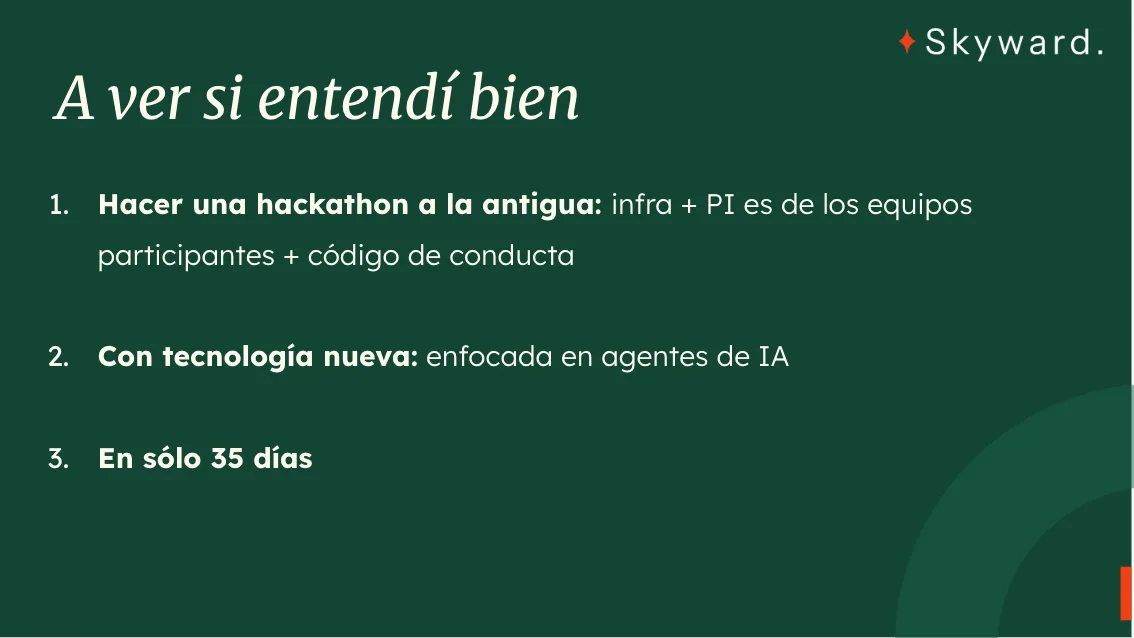
Simple rules, level playing field
We kept the rules deliberately simple:
- Build with AI agents. The project had to meaningfully use AI agents—not just call an API for a text completion.
- Build during the hackathon. Pre-built projects were not allowed. Teams could bring ideas and research, but code had to be written during the event.
- Team size: 2-6 people. Small enough to be agile, large enough to tackle ambitious projects.
- Demo or it did not happen. Every team had to present a working demo. Slide decks alone did not count.
These constraints created a level playing field. Whether you were a senior engineer from a major tech company or a university student building your first agent, the rules were the same. What mattered was what you built in those 48 hours.
Partnership approach
We could not have done this alone in 35 days—nor did we want to. We reached out to partners who shared our belief in the Latin American AI community and were willing to contribute meaningfully:
- ElevenLabs came on board as a key sponsor, providing API credits and a dedicated prize track for the best use of their voice AI technology.
- Cerebras provided access to their high-speed inference infrastructure, giving teams the ability to run models that would otherwise have been too slow for a hackathon setting.
- Several other sponsors contributed prizes, API credits, mentorship time, and logistical support.
The partnership model was simple: we asked partners to contribute things that directly benefited participants—compute credits, API access, prizes, mentors—rather than just logo placement. Every partner delivered.
Results
The numbers exceeded our expectations:
- 194 registered participants
- 104 hackers who showed up and built
- 20 teams that submitted working projects
- 48 hours of building
Prizes
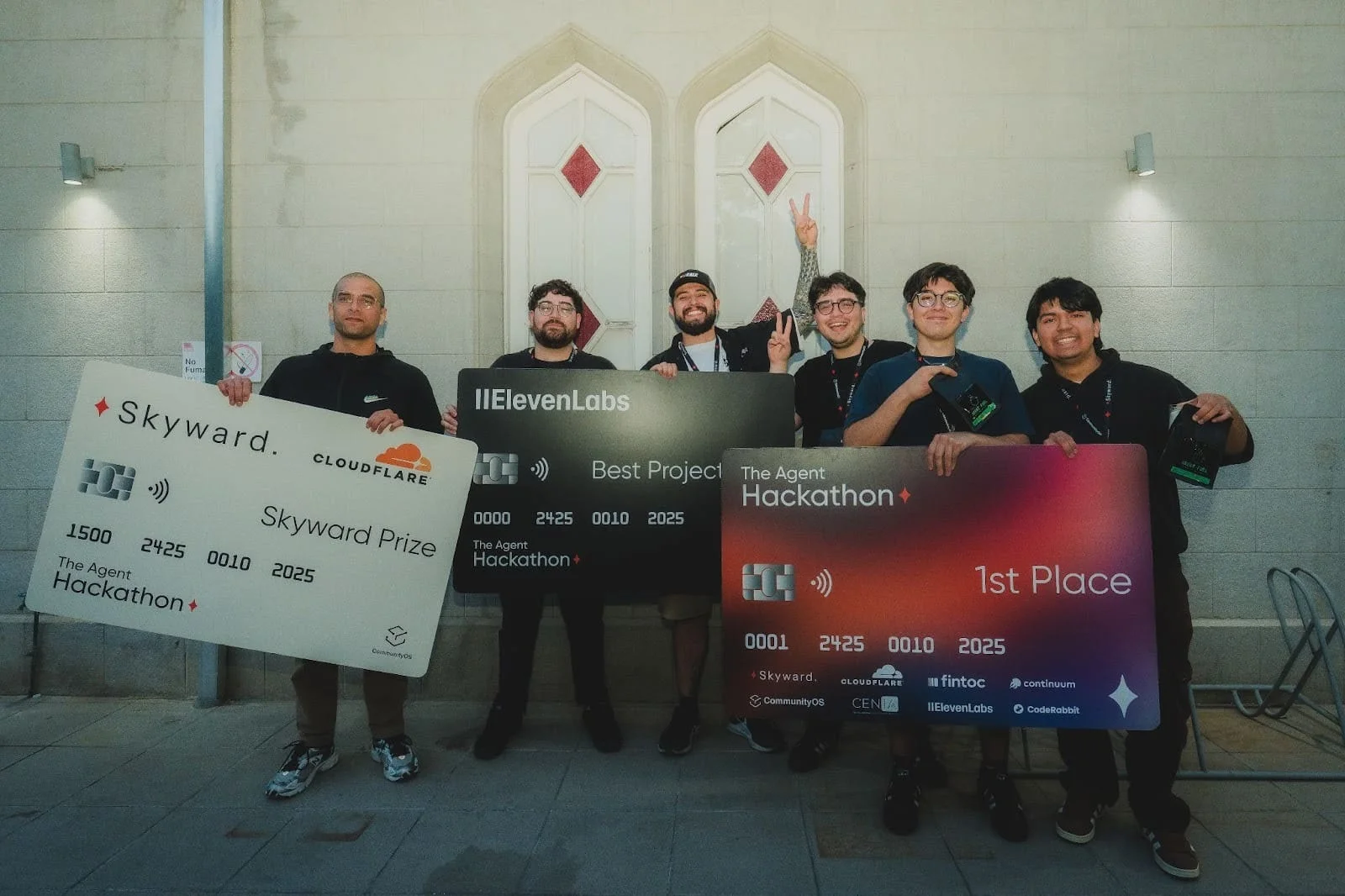
The total prize pool exceeded $60,000 USD, distributed across three main tracks:
1st Place — Compass: $28,800 USD Compass built an AI agent system for navigating complex regulatory landscapes. The judges were impressed by the technical depth, the practical applicability, and the quality of execution in just 48 hours.
Skyward Prize — EnseñIA: $26,000 USD EnseñIA created an AI-powered educational agent that personalizes learning paths based on student interactions and performance. The team demonstrated a deep understanding of how agents can maintain context and adapt over time—exactly the kind of application that excites us at Skyward.
ElevenLabs Prize — Signos: $5,940 USD Signos built an accessibility tool that uses voice AI to help people with hearing impairments interact more naturally with digital services. The creative use of ElevenLabs' voice technology and the social impact of the project made it a clear winner in this track.
Key recommendations
For anyone considering organizing a hackathon, here is what we learned:
- Start with the participant experience. Every decision—venue, food, schedule, rules, judging—should be made through the lens of "does this make the event better for the people who show up to build?"
- Keep rules simple and enforce them consistently. Complex rules create loopholes and arguments. Simple rules create clarity and fairness.
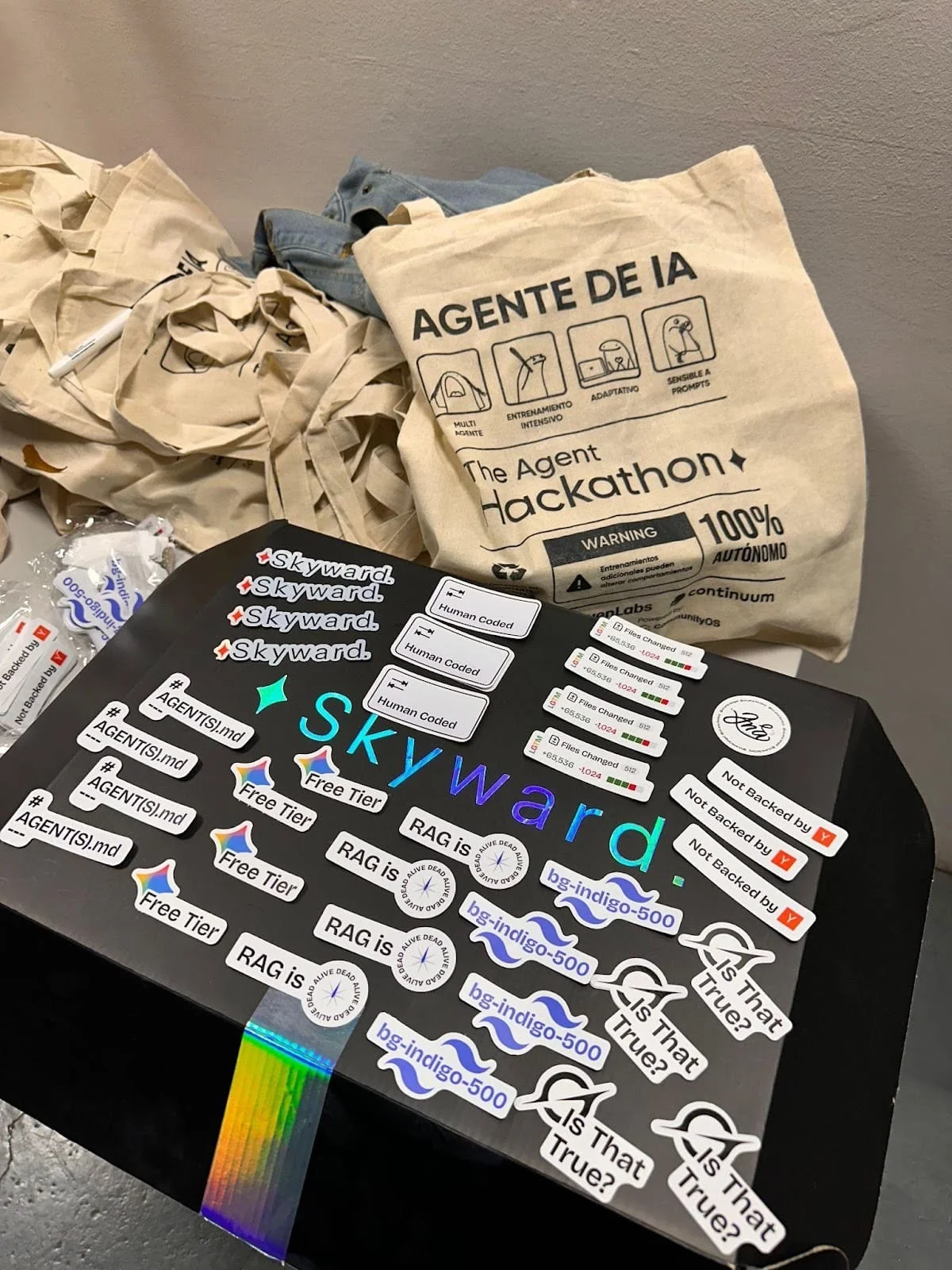
- Invest in logistics, not decoration. Good Wi-Fi matters more than fancy banners. Enough power outlets matter more than branded swag.
- Choose partners who contribute substance. API credits and mentors are more valuable than logos on a website.
- Communicate early and often. From registration to post-event follow-up, participants should never be left guessing about what comes next.
- Have a contingency plan. Things will go wrong—a sponsor drops out, the Wi-Fi fails, a team disputes a judging decision. Plan for the most likely failure modes in advance.
- Document everything. Photos, videos, participant feedback, project submissions. You will want this material later, and participants appreciate being able to look back at what they built.
Core lessons
Thirty-five days is not a lot of time to organize a hackathon. It forced us to be ruthlessly focused on what mattered and to cut everything that did not directly serve the participant experience. In retrospect, that constraint was a gift.
The most important lesson was this: the Latin American AI builder community is hungry for real spaces to create. Not panels, not webinars, not pitch competitions—spaces where they can sit down with other talented people and build something from scratch. When you provide that space and remove the friction, the results speak for themselves.
We walked away from the weekend with 20 working projects, several of which have continued development beyond the hackathon. More importantly, we saw a community forming—people exchanging contacts, forming teams for future projects, and getting genuinely excited about what AI agents can do.

We are already planning the next one.
Enjoyed this article?
Subscribe to get new articles on compliance, risk, and AI.